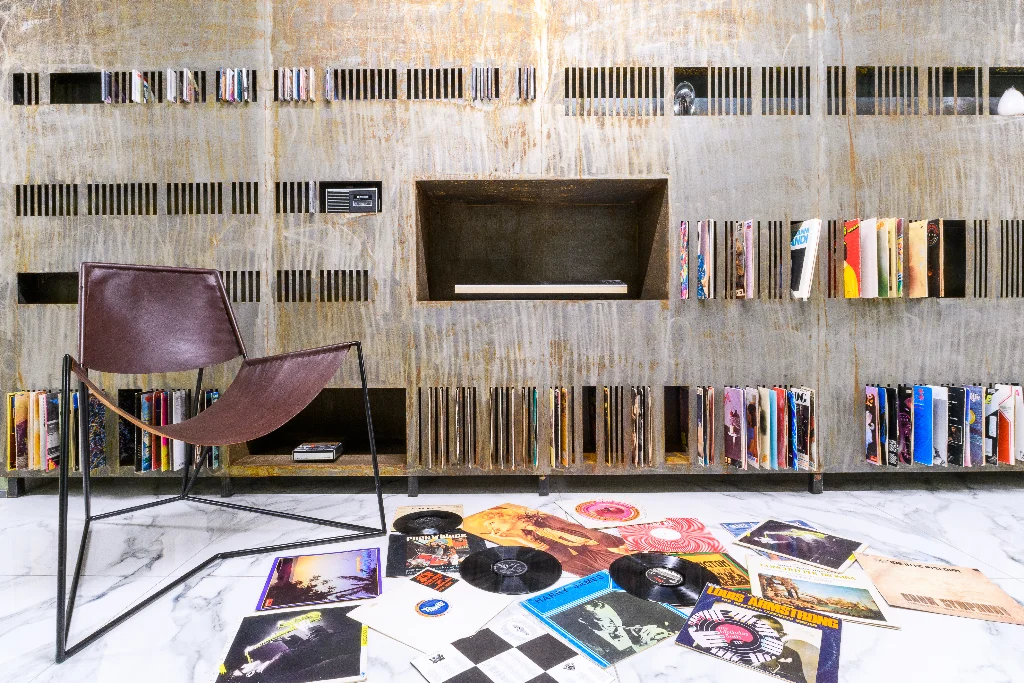
In recent years a word has crossed the world of hospitality like a salty breeze: boutique. Often employed, rarely defined. Yet behind this label lies a precise idea, almost a manifesto: hospitality as a tailor-made experience, tailor-made, not replicable elsewhere.
What “boutique” really means
A boutique hotel is not defined by the number of stars, but by the absence of standardization. Few rooms, each different from the other. A recognizable character, born from a vision - often that of a single architect, a single collector, a single family - and not from a global brand manual. It is a place that is told, not listed. Where design does not simply furnish the space, but interprets it: every detail, from the fabric to the light that enters in the morning, is a narrative choice before an aesthetic one.
In this sense, the boutique hotel is the exact opposite of anonymity: it is hospitality as a creative act, closer to the world of the art gallery than to that of the large hotel chain.
Because this idea belongs to Paestum
Applied to our territory, this idea finds non-random ground. Paestum is not just any place in which to build a boutique experience: it is, rather, the place that this idea has always seemed to demand.
Here the harmony of proportions is not an abstract concept from an interior design manual: it is visible, tangible, guarded by Doric columns that have stood for two thousand five hundred years. The temples of Paestum have been a source of inspiration for centuries for architects, painters and travelers on the Grand Tour, who here learned - or rediscovered - the meaning of measurement, of light, of the relationship between full and empty. It is no coincidence that generations of artists have chosen this coast not only for the beauty of the landscape, but for that particular quality of light which seems made specifically to reveal shapes, rather than hide them.
A hospitality project that wants to define itself as truly boutique, in an area like this, cannot limit itself to "being elegant". It must enter into dialogue with that heritage: with archaeology, of course, but also with local craftsmanship, with ceramics, with the peasant and maritime tradition that has coexisted with great art for millennia. It means choosing design not as decoration, but as continuity - a way to make the present speak with what this land has already, silently, built.
It is here that the concept of boutique stops being an international trend and becomes, for Paestum, almost a natural vocation: a territory that has always generated beauty through measurement, craftsmanship and respect for its surroundings, today finds in hospitality a new, coherent way of telling itself.